
The Virginia Capitol Extension
Richmond, VA
Architecture
Addition to Historic Landmark
27,000 SF
Sonja Bijelić, AIA
(Designed while an Associate Principal at
RMJM. Extension is part of the Virginia Capitol restoration project headed by Dr. George Skarmeas, AIA, AICP)
The Virginia Capitol is a National Historic Landmark built in 1785 and designed by Thomas Jefferson. Home to the General Assembly, the building has undergone numerous renovations and expansions since the 18th century. By the end of the 20th century, it had fallen into a state of disrepair and lacked the proper amenities to accommodate thousands of visitors annually.
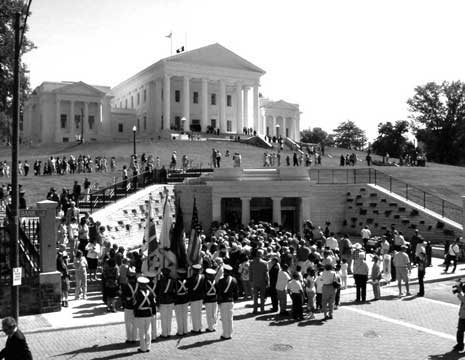
The design approach emphasized both preservation of Jefferson's view of the "Temple on the Hill" and John Notman's landscape design. The new 27,000-square-foot extension opens off Bank Street with a small public plaza set at 45-degrees to the Capitol – historically the angle from which the building was intended to be viewed.
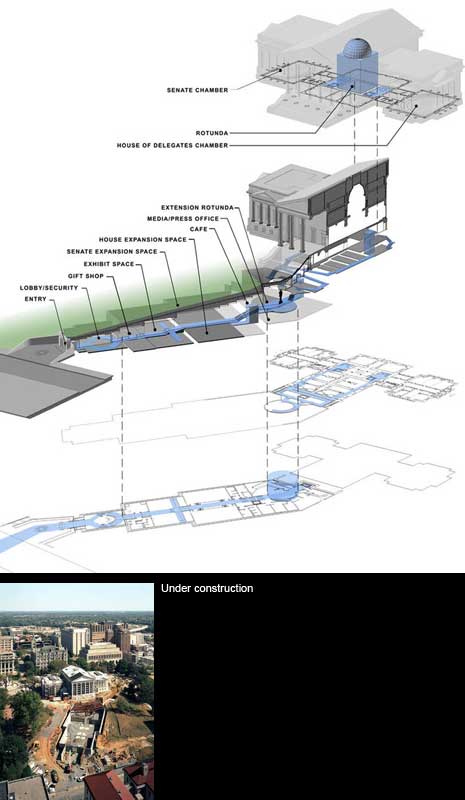
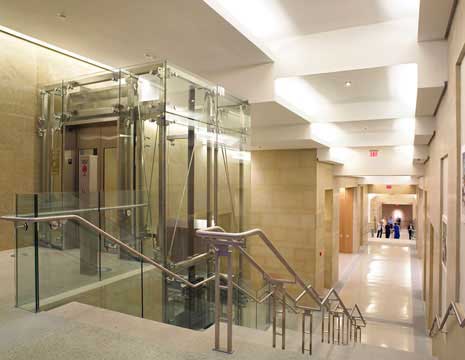
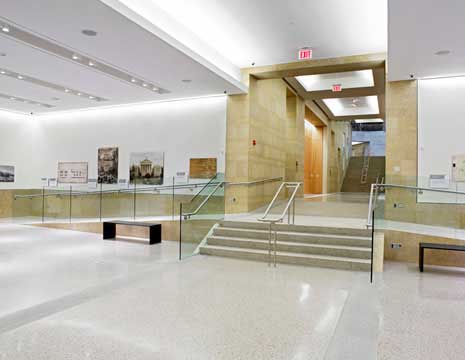
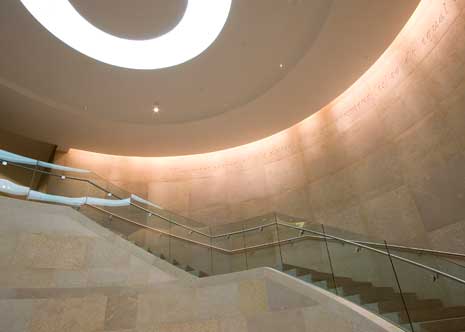
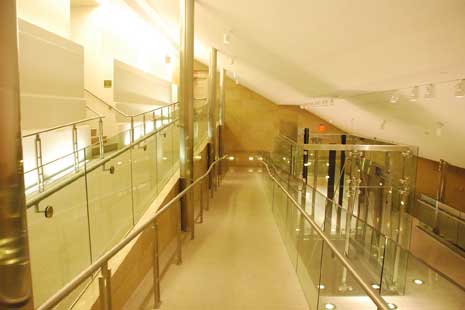
Beyond the entry, the Extension opens onto a circular lobby and security checkpoint, and from there is organized as a procession along an interior street leading to a gift shop, exhibit space, committee rooms and a café. A series of steps the full width of the street emphasizes the gradual ascension/procession and replicates the experience of walking up the exterior south Portico steps. The procession culminates in a Rotunda that connects the extension to the original building and foreshadows the experience of arriving at the most significant historic space – the original Jeffersonian Rotunda.
The Extension's design uses clean lines and minimalist aesthetic of modernism to pay tribute to Jefferson, and classicism, in a space that is at once respectful and joyful, ethereal and (literally) down to earth.
Project was honored with numerous architectural awards and published in varieties of magazines and publications.